
Legendary Chimney Solutions: Premier Chimney Sweeping in Daytona Beach, FL
Daytona Beach is celebrated around the globe for its hard-packed sand, deep-rooted racing heritage, and vibrant coastal atmosphere, yet living in this unique environment presents specific challenges for homeowners. At Legendary Chimney Solutions, we are dedicated to helping you navigate those challenges by maintaining your fireplaces and chimneys so they remain a reliable source of comfort. Living on the coast brings a mix of salt air corrosion and high humidity, so our team is specially trained to handle every aspect of chimney maintenance in this climate. Whether you own a historic bungalow near the river or a modern home closer to the Atlantic, we provide the thorough chimney sweeping and inspection services necessary to keep your system running as efficiently as possible.
We understand that a fireplace is often the heart of the home, even in Florida’s milder winters, and that’s why our technicians approach every job with professionalism and a keen eye for detail. We don’t just brush out the soot and leave… Instead, we look for the underlying issues that could compromise the structure or functionality of your chimney. When you choose Legendary Chimney Solutions, you aren’t just getting a cleaner flue, but you are partnering with a team that truly cares about the long-term well-being of your home and family.
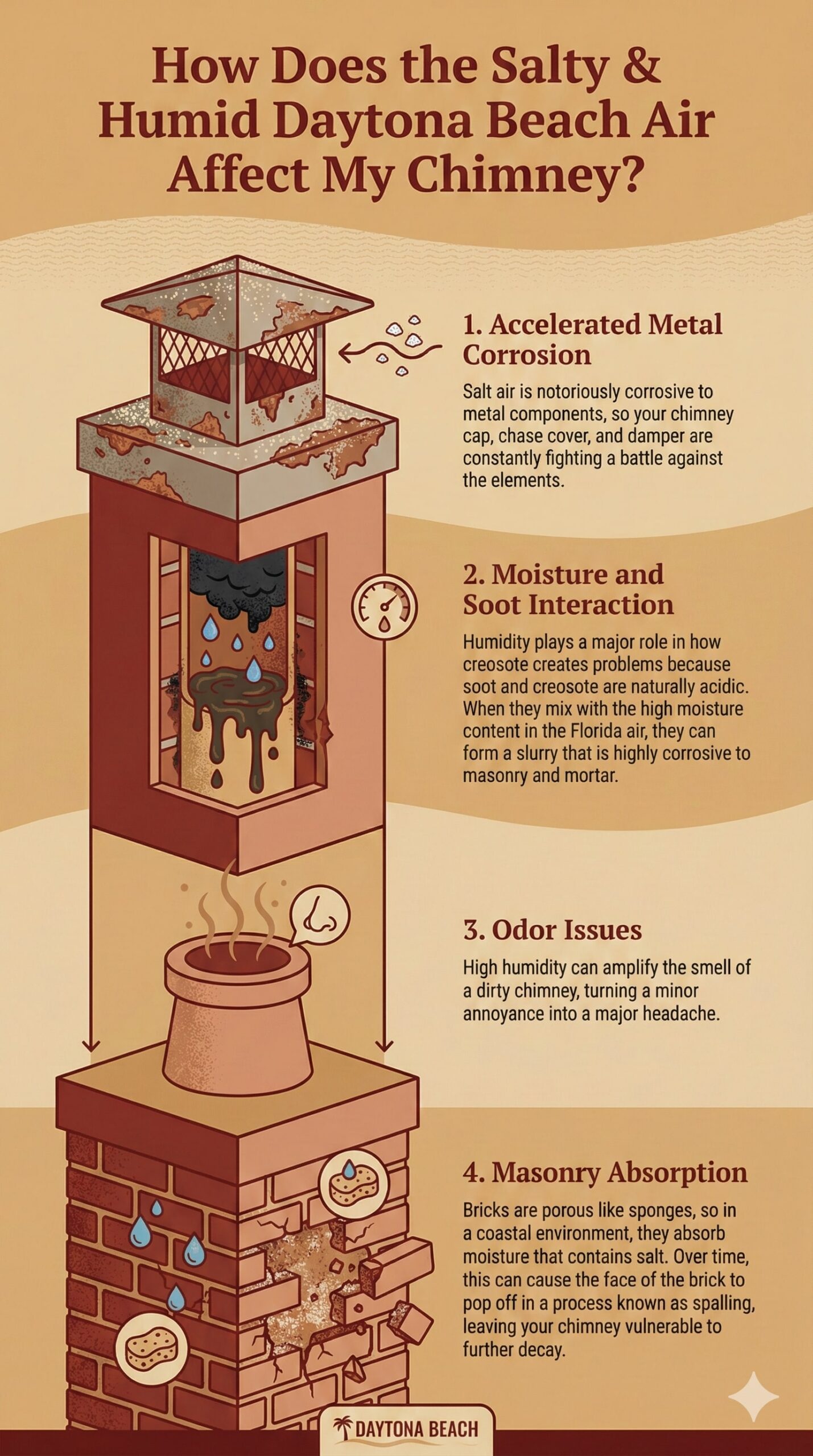
How Does the Salty & Humid Daytona Beach Air Affect My Chimney?
One of the most frequent questions we receive from new residents – or those new to fireplace ownership in Florida – concerns our specific climate. The combination of persistent high humidity and salt-laden air creates a unique environment for chimneys that differs significantly from drier, colder climates, meaning we have to be vigilant about different types of wear and tear.
- Accelerated Metal Corrosion: Salt air is notoriously corrosive to metal components, so your chimney cap, chase cover, and damper are constantly fighting a battle against the elements. If these components rust or deteriorate, they can fail to prevent water intrusion or animal entry. We frequently find rusted dampers that no longer seal properly, which allows conditioned air to escape while letting humid outdoor air drift inside.
- Moisture and Soot Interaction: Humidity plays a major role in how creosote creates problems because soot and creosote are naturally acidic. When they mix with the high moisture content in the Florida air, they can form a slurry that is highly corrosive to masonry and mortar. This acidic mixture eats away at the flue liner and the mortar joints from the inside out, causing damage that might not be visible until it is severe.
- Odor Issues: High humidity can amplify the smell of a dirty chimney, turning a minor annoyance into a major headache. As the moisture permeates the porous masonry and mixes with old soot deposits, it can create a strong, campfire-like odor that drafts back into your living space, especially during the humid summer months when the air conditioner is creating negative pressure.
- Masonry Absorption: Bricks are porous like sponges, so in a coastal environment, they absorb moisture that contains salt. As the water evaporates, salt crystals remain inside the brick pores. Over time, the pressure from these growing crystals can cause the face of the brick to pop off in a process known as spalling, leaving your chimney vulnerable to further decay.
Regular sweeping is vital here, not just to remove fuel for a potential fire, but to remove the acidic soot that reacts with our humid air. By keeping the flue clean, we help reduce the chemical wear and tear on your chimney system so it lasts longer.
Serving the World’s Most Famous Beach
Daytona Beach is a place full of energy, history, and natural beauty, and we are incredibly proud to serve this community. It is a city that offers a diverse range of activities and sights that make it a fantastic place to live, work, and raise a family.
Residents and visitors alike are drawn to the iconic Daytona International Speedway, the home of the Daytona 500, which puts our city on the global map and brings an undeniable energy to the area. However, for those who prefer a slower pace, the hard-packed sands of “The World’s Most Famous Beach” offer the unique experience of driving right on the shoreline, allowing for a day of sun and surf unlike anywhere else. We also love the history found at the Ponce de Leon Inlet Lighthouse & Museum, which stands as the tallest lighthouse in Florida and offers breathtaking views of the inlet and surrounding areas.
From the bustling Daytona Beach Boardwalk and Pier to the serene trails at Tiger Bay State Forest nearby, this area has something for everyone. At Legendary Chimney Solutions, we work hard to ensure that after a day spent exploring the Speedway or relaxing by the ocean, you can return to a home that is comfortable, welcoming, and well-maintained.
After a Hurricane or Tropical Storm, What Steps Should Homeowners Take Before Using Their Fireplace Again?
Living in Daytona Beach means we must be prepared for tropical weather, and unfortunately, hurricanes and severe storms can inflict damage on a chimney structure that isn’t always immediately visible from the ground. Lighting a fire without a post-storm inspection can be risky, so we always recommend a professional look before the first burn of the season.
- Check for Missing Caps and Covers: High winds are notorious for ripping chimney caps and chase covers right off the top of the flue. Without these protective covers, torrential rains associated with the storm can pour directly into your fireplace system, soaking the firebox, rusting the damper, and damaging the liner, so a quick visual check is essential.
- Inspect for Structural Shifts: While masonry is heavy, the immense pressure of hurricane-force winds can cause taller chimneys to shift or lean. This movement can crack the flue tiles inside or sever the connection where the chimney meets the roofline, creating gaps where heat or sparks could escape into the attic or walls.
- Look for Water Penetration: Wind-driven rain can be forced through even the smallest cracks in your masonry, causing hidden water damage. After a storm, check your attic and the walls surrounding the chimney for damp spots because if water has saturated the masonry, firing up the fireplace can cause the water to turn to steam rapidly, potentially cracking the bricks or tiles further.
- Check for Debris Blockages: Storms strip trees of their leaves and branches, and the wind can carry them surprisingly far. It is very common for us to find palm fronds, Spanish moss, and tree limbs jammed into chimney flues after a storm. If you light a fire with this debris blocking the exit, smoke and carbon monoxide will back up into your home instantly.
We strongly advise scheduling an inspection after any major storm event because conditions can change rapidly. Our team can identify if the wind has loosened flashings or if flying debris has cracked the crown, helping to ensure that your system operates as safely as possible when the temperatures finally drop.
How Does Burning Different Fuels Change the Need for Sweeping?
Many homeowners assume that if they don’t burn “regular” wood, they don’t need to sweep their chimney, but the reality is that the type of fuel you use dictates the type of byproduct produced. Nearly all solid fuels require maintenance to ensure proper drafting and reduced fire risk, so understanding what you burn is key to maintaining your home.
- Seasoned Hardwood: This is the standard for wood burning, and when burned properly, it produces soot and Stage 1 or Stage 2 creosote. While this is cleaner than burning wet wood, it still accumulates over time, so if you burn regularly during the winter, an annual sweep is critical to remove these deposits before they thicken into a more dangerous glaze.
- Softwoods & Unseasoned Wood: Burning pine or wood that has not been properly dried (green wood) creates cooler smoke with high moisture content. This condenses rapidly in the flue, leading to a faster buildup of sticky, tar-like creosote (Stage 3). This type of buildup is highly flammable and much more difficult to remove, often requiring chemical treatments and specialized tools to get the flue clean again.
- Gas Logs: While gas logs do not produce creosote, they can produce soot, especially if the logs are displaced or the air-to-fuel mixture is off. Furthermore, gas chimneys are still prone to blockages from bird nests or debris, and a blocked gas flue can send carbon monoxide back into the home, which is odorless and invisible.
Regardless of what you burn, the byproduct needs to be managed so your system flows freely. Our technicians can assess the specific type of buildup in your flue and use the appropriate brushes and rods to clean it effectively, while also checking the appliance itself to ensure it is burning as intended.
Can a Single Missed Annual Inspection Allow Enough Creosote to Ignite a Chimney Fire?
There is a common misconception that chimney fires only happen in homes that have been neglected for decades, but the reality is that dangerous conditions can develop much faster than many homeowners realize. Sometimes, a dangerous level of buildup occurs within a single burning season, so skipping a year is riskier than it seems.
- The Volume of Usage: If you use your fireplace as a primary heat source or use it every evening during a cold snap, you are generating a significant amount of soot. In a single winter of heavy use, it is entirely possible to accumulate enough creosote to fuel a chimney fire, even if the chimney was clean at the start of the season.
- Drafting Habits: How you burn matters as much as how often you burn. If you frequently choke down the damper to get a “longer burn” or let the fire smolder, you are creating cooler smoke. Cool smoke condenses faster in the flue, depositing creosote at a much higher rate than a hot, briskly burning fire, so one season of poor burning habits can create a glazed creosote situation.
- Unknown Blockages: A missed inspection means you might miss a blockage that occurred during the off-season. If a raccoon has built a nest in your flue during the summer, and you light a fire in the fall without checking, that nesting material can ignite immediately.
- Glazed Creosote Formation: Stage 3 creosote (glaze) can form relatively quickly under the right conditions. This substance is dense, hard, and extremely flammable, looking almost like poured tar. Once ignited, it burns at incredibly high temperatures, often exceeding 2000 degrees Fahrenheit, which can crack masonry and melt metal liners.
We recommend annual inspections not just to sell a service, but because conditions change year to year. Skipping a year leaves you blind to the current state of your chimney, and our goal is to catch creosote accumulation while it is still powdery and easy to brush away, rather than waiting until it becomes a dangerous fuel source.
How Do Spring Pollen or Autumn Leaves Contribute to Blockages?
In Daytona Beach, we don’t deal with winter ice blocking our chimneys, but we do battle with the lush flora that makes Florida beautiful. Organic debris is a leading cause of chimney performance issues in our area, and it affects the system differently depending on the season, so we have to stay on top of it year-round.
- Spring Pollen & Vines: During the spring, the air is thick with pollen, and plant growth accelerates. We often see aggressive vines, like ivy or trumpet creeper, growing up the side of homes and entering the chimney structure through the cap or mortar gaps, which can physically block the exit of smoke. Additionally, thick layers of pollen can mix with moisture inside the cap screen, creating a paste that hardens and restricts airflow.
- Autumn Leaves & Pine Needles: While we don’t have a traditional northern autumn, we do have oak trees and pine trees that shed debris. Falling leaves and pine needles can accumulate around the chimney crown and chimney cap, and if the cap is missing or the screen size is too large, this debris falls into the smoke shelf area behind the damper. This creates a highly flammable pile of tinder right above your firebox.
- Palm Fronds & Seeds: Palm trees drop seeds and heavy fronds, and a palm frond falling from a height can damage a chimney cap by bending the mesh and allowing larger debris or animals to enter. The seeds can also attract rodents, who may then decide your chimney looks like a safe, secluded place to nest.
- Migratory Birds: Migratory birds, like chimney swifts, are drawn to open masonry chimneys to roost and raise their young. They build nests using twigs and saliva that adhere to the chimney walls, creating significant blockages. Because Chimney Swifts are federally protected, we cannot remove them while they are nesting, so regular sweeping before the nesting season helps keep the flue clear, and installing a proper cap prevents them from entering in the first place.
When we perform a sweep, we aren’t just looking for soot. We’re actively clearing out the organic clutter that nature deposits. A clean flue drafts better, smells better, and functions as safely as possible, giving you one less thing to worry about.
Ready for a Cleaner Chimney?
Don’t let the salt air or a year of heavy use compromise the comfort of your home. At Legendary Chimney Solutions, we are ready to help you maintain your fireplace so you can enjoy it with peace of mind. Schedule your chimney sweeping in Daytona Beach with us today!