
Wood Fireplace Insert Installation by Legendary Chimney Solutions
Trust Us in Ormond Beach, Orlando & More
If you have an older masonry fireplace that’s been sitting cold, underperforming, or simply eating your energy bill through a drafty flue, a wood-burning fireplace insert might be one of the smartest upgrades you can make to your home. A wood fireplace insert takes everything you love about burning real wood – the heat, the crackle, the authentic smell of a real fire… – and dramatically improves efficiency, safety, and output by transforming your existing fireplace opening into a high-performance, sealed wood-burning system.
Brands We Carry
Pacific Energy
Superior Fireplaces
Hearthstone
Empire Stove
True North
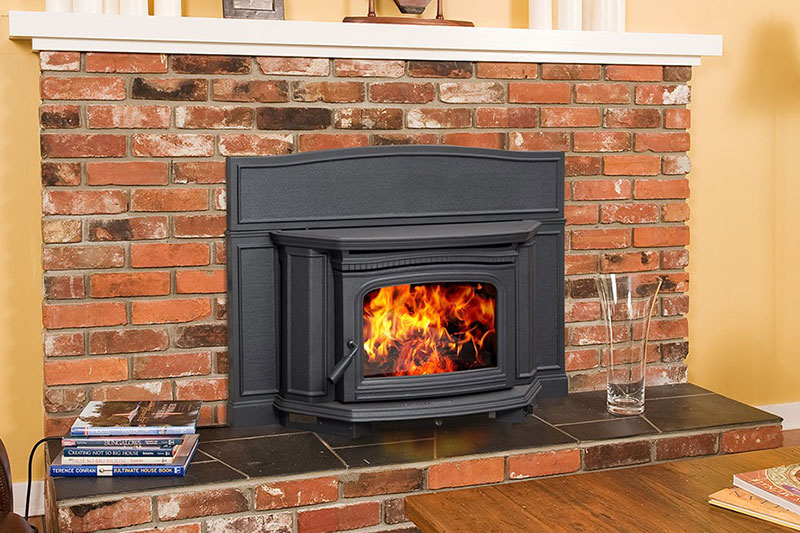
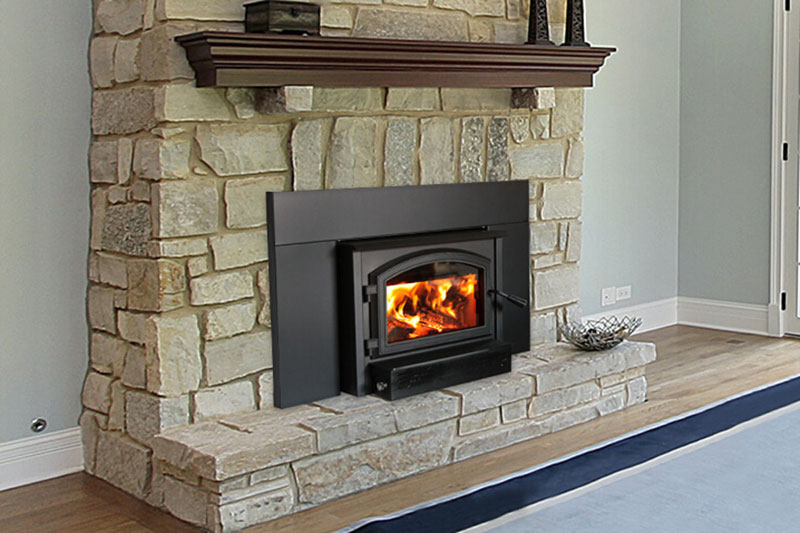
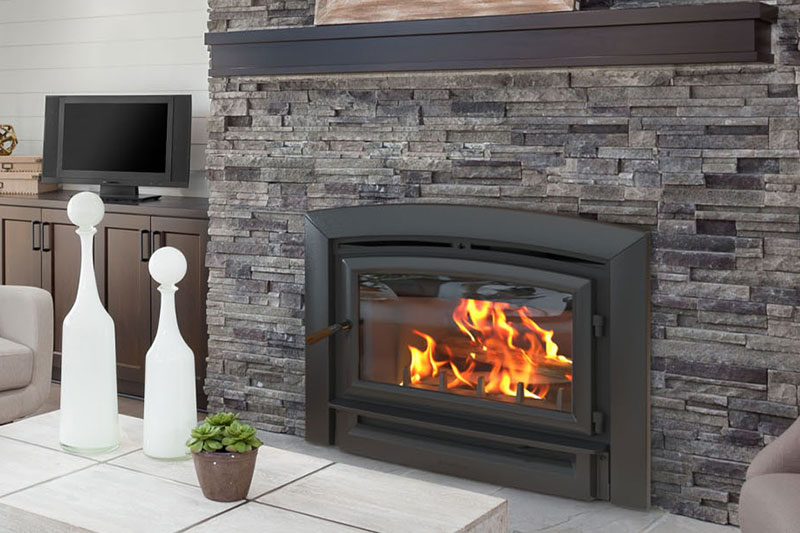
What Is a Wood Fireplace Insert & How Is It Different from a Regular Fireplace?
A wood fireplace insert and a traditional open masonry fireplace may look similar from across the room, but the way they function – and perform – are worlds apart.
A wood-burning fireplace insert is a self-contained, EPA-certified wood-burning appliance that is installed directly into an existing fireplace opening. Think of it as fitting a high-efficiency wood stove inside the shell of your existing fireplace. The unit slides into the masonry opening, a new stainless steel liner is run from the insert’s flue collar up through the existing chimney to the top, and the face of the insert is trimmed out to seal the gap between the unit and the surrounding masonry.
Open Masonry Fireplace
- Burns wood in an open firebox with no sealed combustion chamber
- The majority of heat generated (estimates range from 70% to 90%) rises directly up the chimney flue and is lost to the outside
- Cold outside air is constantly drawn into the home through the open flue to feed combustion, which can actually make surrounding rooms colder
- The open firebox design provides minimal control over airflow, burn rate, or heat output
- Produces significant creosote and smoke as a byproduct of inefficient, low-control combustion
Wood Fireplace Insert
- Features a sealed, double-walled firebox with a controlled air intake system that manages combustion far more precisely
- Most quality inserts operate at 70–80% efficiency – the vast majority of heat generated stays in your home rather than escaping up the chimney
- Glass doors allow you to view the fire while keeping the combustion chamber sealed from the room
- Air wash systems keep the glass clean by directing airflow across the interior surface
- A dedicated liner eliminates the oversized, inefficient draft of a large masonry flue
- EPA certification ensures reduced emissions and cleaner, more complete combustion
What’s the Wood Fireplace Insert Installation Process Like?
- Inspection & Sizing: A certified technician evaluates the chimney and measures the firebox dimensions to ensure a perfect fit and proper draft.
- Liner Selection: A stainless steel liner is selected and sized precisely to match the insert’s output, preventing smoke spillage or creosote buildup.
- Liner Installation: The liner is threaded through the chimney and secured with a top plate and spark-arresting cap to seal out debris and weather.
- Insert Placement: The unit is positioned in the firebox with specific clearances, and the flue connector is securely sealed to the liner.
- Surround Installation: A decorative trim panel is installed to create a critical airtight seal between the insert and the masonry.
- Testing & Orientation: The technician performs a test fire to confirm performance and instructs the homeowner on how to operate and maintain the unit.

Why Would I Choose a Wood Insert Over Other Fireplace Options?
There are several paths a homeowner can take when upgrading or converting an existing fireplace, and choosing between them isn’t always easy or obvious. Understanding why a wood insert stands on its own merits helps you make a confident, informed decision rather than simply defaulting to whatever seems easiest.
1. You want to burn real wood…just more efficiently.
- No gas fireplace or electric unit replicates the radiant heat, the genuine crackle, the smell, and the visual depth of a live fire.
- Great for homeowners who specifically want a wood fire experience without a ton of heat loss, a wood insert is ideal.
- Wood is a renewable fuel source and, for many homeowners, an economical one – particularly for those with access to their own timber or affordable local wood.
- Unlike gas, burning wood doesn’t require an ongoing utility relationship or expose you to fuel price fluctuations.
2. You have an existing fireplace that you still want to use.
- Many older masonry fireplaces in Florida homes were built for aesthetics as much as function.
- A wood insert transforms a decorative or marginally functional fireplace into a genuine, high-output heating appliance.
- You preserve the investment and character of your existing masonry, while dramatically improving what it can do.
- A wood insert costs significantly less than demolishing and rebuilding a masonry fireplace.
- It preserves your chimney structure and requires less invasive installation than a new freestanding wood stove with a through-wall or through-roof flue installation.
3. You want strong heat output.
- A quality wood insert can produce between 40,000 and 100,000 BTUs of heat output depending on the model and firebox size.
- Some are capable of serving as the primary heat source for a significant portion of your home.
- For Florida homeowners who experience cool winters, strong heat output can meaningfully reduce reliance on central heat.
What Size Wood Insert Do I Need? How Do I Choose the Right One?
Insert sizing is not simply a matter of picking the largest unit that fits your opening. Matching the insert to both your fireplace dimensions and your home’s heating needs is vital for maintaining efficiency and safety – which is why working with our experts from start to finish is such a must.
- The insert must physically fit within your existing fireplace opening – height, width, and depth must all be measured and compared to the unit’s specifications.
- Most manufacturers offer multiple size categories, with the firebox opening dimensions defining which category applies to your fireplace.
- The surround trim plate typically has enough adjustability to cover minor measurement variations, but a precise fit is always the goal.
How Do I Load & Operate My Wood Insert for Maximum Performance?
A wood insert operates very differently from an open masonry fireplace, and homeowners who treat them the same way quickly run into problems – think excessive creosote, poor heat output, smoke spillage into the room… Learning the correct technique from day one makes all the difference.
- Open the air controls fully before starting any fire to ensure maximum draft and oxygen availability for ignition.
- Confirm the flue is clear of obstructions if the insert hasn’t been used recently.
- Pre-warm the flue if the insert has been dormant, as a cold, sealed liner can resist draft initially.
- Avoid using accelerants of any kind – lighter fluid, gasoline, or kerosene have no place near a wood-burning appliance.
- Once the fire establishes and the glass doors are fully closed, adjust the primary air control to your desired burn rate.
- Load additional wood before the fire burns completely down to coals if you want to maintain a continuous burn.
- When finished, allow the fire to burn down to a solid coal bed before reducing airflow significantly.
- Never fully close all air controls on a smoldering fire – some airflow must always be maintained until the fire is completely out.
- Leave the damper (built into the insert’s flue collar) open until all coals are completely cold.
What Does Ongoing Maintenance Look Like for a Wood Insert?
A wood insert is a hardworking appliance, and like any hardworking appliance, it rewards attentive maintenance with years of reliable, safe performance. Homeowners who stay on top of both routine tasks and annual professional service get far more from their inserts – and spend far less on repairs over time.
- Ash Removal: Remove accumulated ash when it builds to within a few inches of the grate, leaving a thin layer (1–2 inches) on the floor of the firebox to serve as insulation for future fires during the burn season. Always use a metal ash bucket and store cooled ash outside away from the structure.
- Glass Cleaning: Use a dedicated wood stove glass cleaner or a damp paper towel dipped in cool ash to remove smoke residue from the doors – never use ammonia-based cleaners on ceramic glass.
- Door Gasket Inspection: The rope gasket that seals the firebox doors is the unsung hero of insert efficiency – a failing gasket allows uncontrolled air infiltration and causes the fire to burn hotter and faster than intended. Test by closing the doors on a dollar bill, and if the bill slides out easily, the gasket needs to be replaced.
- Air Control Cleaning: Periodically wipe down and check the operation of the air intake controls, as debris or warping can prevent them from opening and closing properly.
- Annual Professional Service: Invest in a full professional inspection and sweeping on an annual basis to ensure everything is functioning as it should.
Ready to Transform Your Fireplace With a Professional Wood Insert Installation?
Your existing fireplace already has the bones of something exceptional. With a professionally installed wood-burning insert, it becomes a high-efficiency, high-output heating appliance that you’ll actually want to use – every cool evening, every season. At Legendary Chimney Solutions, we handle every aspect of your wood insert project with the precision and care it deserves, from the initial inspection and sizing consultation through liner installation, final testing, and homeowner training. Our CSIA-certified master sweep has over 32 years of experience, and we stand behind every installation we perform.
Reach out today to schedule your appointment.
Interested in updated your current fireplace to a gas insert instead? No matter your fuel choice, we have lots of great insert options.